Showing posts with label community. Show all posts

Saturday, May 11, 2019

An invitation to a deeper conversation

Through my grassroots interfaith environmental advocacy, I’ve gotten to know lots of men and women in rural Illinois, which is very different from where I grew up in suburban Detroit.


I was raised Catholic, went through 12 years of Catholic education including an all-girls high school. And then I went to a United Methodist affiliated college and met a boy brought up in the United Methodist church. 


We started going to church together, and I started looking at the gospel in a different way. I saw women able to preach and lead congregations for the first time. I learned more about social justice in our first years of marriage than I’d learned in all my years of catechism.

  
This didn’t create tension in my family, but it did generate some deep discussions about how our faith informs our ideas and our politics on the environment, health care, reproductive rights, economics, and human sexuality, to name a few. Unsurprisingly, I didn’t always agree with my parents. Sometime I don’t entirely agree with my husband. But we’ve been able to develop some ground rules over the years:

  • You can always find common ground
  • Assume one another's best intentions
  • Look for nuance—not everything is black and white
  • Get comfortable with being uncomfortable
  • Ignoring it won’t make it go away   
  • I’m a beloved child of God and so are you
I’ve learned that not everyone goes through this kind of transformation. Not everyone learns how to engage in difficult or political conversations with grace. And some of us opt to stay out of it entirely in the interest of avoiding conflict. This rarely works and only reinforces that we simply don’t know how to TALK with each other about important issues.

All of this was on full display during the 2016 presidential election process and continues to color our country’s political discourse. And in February 2019, my heart broke as I watched my beloved church begin down a path of pain and exclusion.

When the hosts of a podcast I listen to wrote a book this winter, I Think You’re Wrong But I’m Listening: A Guide toGrace-Filled Political Conversations, I read it in nearly one sitting. I had been craving a new way to engage my friends and neighbors in difficult conversations, and this was it.

One of my favorite quotes from the book is this:

“We do not demonstrate love toward our neighbors by demonizing them over how they feel about tax policy or reproductive rights. We do not turn the other cheek when we treat politics as an insular sphere in which fighting fire with fire is the only way. We do not live as the hands and feet of a loving creator when we opt out of the processes that dictate roads and bridges, school curriculum and water treatment, war and peace. Neither stridence or apathy is a virtue.”

The book outlines many of the above rules I’ve employed over the years, and added a few more:

  • Take off your team jersey: ever get between a Cubs fan and a Cards fan? We need to learn to prioritize our relationship with the person we’re disagreeing with rather than our team. That also means prioritizing deep understanding of a topic of disagreement rather than winning, which brings us to #2:
  •  Get curious: does that thing you read on the internet seem completely unbelievable? Does it make you angry? Well…maybe it’s designed to. Do some research. Ask questions. If you’ve been watching the news lately, I think we’ve learned that social media has been used to manipulate our emotions and quite possibly our votes. Know that the truth might challenge your beliefs, which brings us to #3:
  •  Exit the echo chamber: Balance your news outlets and consider the source. If it’s not being shown on several major news outlets, that should give you pause. Time to get curious again and do some research. Take the opportunity to discuss the drama du jour with someone who might think differently than you. And again, make it your goal to deeply understand the topic, not score points for your side.
As people of faith, we’re called to be leaders in doing this well, or at least to try.

That's why I'm running to be a lay delegate to General Conference 2020. That's why I participate in the IGRC Unity group.  And that's why I want to be in conversation with you, dear reader, especially if you're a voting member of the Illinois Great Rivers Conference of the United Methodist Church. 

We have much to decide in 2020. The special General Conference rulings on human sexuality are only a small part of the things I'm passionate about: I am deeply concerned about our disregard for and abuse of creation, our reconciliation with our Native American sisters and brothers, and the status and role of women. I believe God will work with us in our decision making and will use our pain and our joy for good.

What is your hope for the United Methodist Church? Where is the pain? The joy? How are you being called to ministry? Who isn't being heard? 

I'd love to have these conversations in person or on the phone. I want to listen. I want to understand. Email me at christina.krost@gmail.com if you want to talk.




Thursday, December 7, 2017

Lifting the Fog

Take no part in the unfruitful works of darkness, but instead expose them.
Ephesians 5:11

It's foggy in Pittsburgh. It's the kind of fog that prevents you from seeing down the street, but not out your window. This creates a sense of insulation and isolation--that you're all alone in space rather than part of a large urban city. The fog is probably because of Pittsburgh's hilly topography, or the convergence of the Allegheny and Monongahela rivers, or the unseasonably warm weather in the first weekend of December.


I found myself in Pittsburgh for a meeting of the United Methodist Women Be Just Be Green Jurisdiction Guides. We came from around the United States to set outreach goals and strategy, decide how to communicate our advocacy campaigns to our members, and plan our presentations for Assembly in 2018. Because our advocacy campaign is about methane and natural gas extraction or "fracking", we organized a visit to local communities in Pennsylvania impacted by the natural gas industry. We partnered with local activists and families and listened to their stories.

Fracking is the process of injecting water, chemicals, and sand underground to fracture rocks (like shale) to release gas. The process uses large amounts of water which,when mixed with fracking chemicals, becomes toxic. Fracking also releases methane, a greenhouse gas 84 times more potent than carbon dioxide.

When fracking began to increase in Pennsylvania in the early 2010s, fracking operators claimed that the United States had a 100 year supply of cheap natural gas and that fracking could help lead to energy independence. They also promised jobs. What has happened instead is a devastation of land, air, and water in the name of progress. The majority of the jobs created were temporary construction jobs. It is very unlikely that natural gas will be used to heat our homes and power our vehicles for the next generation, as the supply has been overestimated. We may already have passed the peak of natural gas extraction. It is rapidly becoming too expensive to extract natural gas--the energy return on energy invested (EROEI) profit margin is closing.

What is clear are the health and environmental risks from fracking. Allegheny County, where Pittsburgh is located, is in the top 2% for cancer risk from air pollution. Up to 14% of Pittsburghers suffer from asthma as compared to the national average of 8%-10%. Asthma acutely impacts children, and is a leading cause of chronic school absenteeism. Air pollution exacerbates cardiovascular disease and is a significant cause of premature death among those with preexisting cardiovascular conditions. Air pollution has been connected to autism, diabetes, and dementia.


We toured Beaver County, PA where Shell is planning to build an ethane cracker plant, the largest petrochemical facility in North America. This plant will increase demand for fracked natural gas which will be turned into plastic. It will also trigger the construction of an ethane pipeline system that will cross the Ohio river.


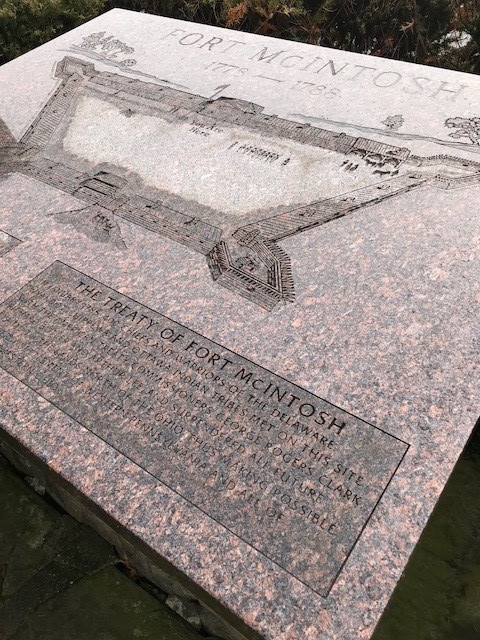
I was struck by a stone marker I read at one of our tour stops. The land where the cracker plant is being built was gained by treaty with the Delaware, Wyandot, Chippewa, and Ottawa Indian tribes. Its devastating to think of how we've abused the land, air, and water that was never ours to have.

We continued on our tour to Washington County, the most heavily fracked county in Pennsylvania. We saw fracking pads and waste water retention ponds within 900 feet of an elementary school. We heard about the mystery surrounding chemicals in fracking fluid and methane emissions, which the fracking operations fight not to disclose. We watched as several large trucks full of fracking waste merged onto a highway and wondered aloud what would happen if one of the trucks spilled it's contents.


We met a man and his son who live with a fracking well in their backyard. The man has suffered a brain tumor which robbed him of his sight in one eye. He has kidney disease and endocrine problems. His son is incontinent. He has learning and attention problems. He was burned by an unseen chemical in his bathtub water as a small child. We met a mother who's child has leukemia. We met a mother who has to keep air quality monitors in every room of her house to keep an eye on the particulate matter in her air. They can't drink their water. They're concerned about the animals on their farm. They are watching their land be poisoned in front of their eyes, but since the fracking well isn't technically on their land they have no legal recourse. No one can move because they can't sell their homes.
 

As our tour progressed, the fog lifted. The sun began to shine. And the shadows around the fracking industry lifted. I saw with clarity the lies, corruption, manipulation, and greed. The evil of putting profits over people was exposed. But I felt a small sense of relief that fracking wasn't going on in my backyard--my children were safe. And then three days after I returned home from Pennsylvania there was a natural gas pipeline explosion in Illinois that killed 2 people, a father and son working on their farm. If you don't think natural gas affects your community, think again.

But the fog is lifting. There is hope. There are dedicated activists like Moms Clean Air Force, Clean Air Council, and Protect Our Children fighting to shine light on this industry and protect our common land, air, and water. There are resources like the Oil & Gas Threat Map that can help you assess your family's risk. Don't be afraid to educate yourself about fracking, speak to your representatives, and write letters to the editor. Speak truth to power. The only way to make change is to do the hard work. We cannot turn a blind eye to our brothers and sisters suffering in Pennsylvania, or Texas, or Oklahoma. But if we work with one another, we can lift the fog together. 


Thursday, August 24, 2017

Shareholder Report

This summer I purchased a share from First Fruits Homestead, a local Community Supported Agriculture (CSA) farm. Every other week for 14 weeks I received a box of locally grown fresh produce for an up front investment of $200.

CSA Week 13, photo credit First Fruits Homestead
I got to see where my food was grown, I became friends with my farmers (or farmHERS), and my family got to try new foods and new recipes. Overall, it was a great experience.

Here are the top 10 things I learned with my first CSA share:

1. Garlic Scapes are a thing. You will get a lot of them early in the season. Learn how to use them here.
2. Eat the salad greens first.
3. Elephant garlic is not garlic. But it's tasty in it's own way.
4. You will not be able to eat all the tomatoes, cucumbers, or zucchini you receive. Learn how to preserve or can these things for later. I made and froze tomato soup and bread and butter pickles.
5. Get the kids involved in finding recipes. We like these 3 plant-based diet cookbooks: Oh She Glows Everyday, Forks Over Knives Family, and The CSA Cookbook.

I highly recommend supporting your local farmers by purchasing a CSA share.  Use this site to find a CSA near you.

What's you favorite recipe to use with your summer produce?

Monday, January 23, 2017

Why I marched

On Saturday I drove my oldest two daughters up to Champaign/Urbana to participate in our local Women's March. We joined several thousand men, women, and children and met up with some female United Methodist pastor friends. Todd, feeling left out but home working on his sermon, decided to put Harper in the car and join us. The march was peaceful, inspiring, and energizing and I was glad I'd brought my family to participate. We had lunch at a local restaurant and spent time with our clergy friends. It was a beautiful afternoon, both literally and figuratively.


I've received some questions (and criticism) about my views on the march. It seems to some that my faith and position as a pastor's wife are at odds with my views on social justice. Or that it's unchristian to disagree with our leaders and that we'd all be better off just staying quiet and going along to get along.

Not coincidentally, my social justice views line up very closely with those of the United Methodist Church on many, but not all, causes I care about. But I thought I'd clarify why I marched and what I believe. I don't expect everyone to agree with me, but perhaps this post will spark a discussion or raise awareness or inspire compassion.

So here goes.

Some folks were fired up that pro-life groups were "banned" from marching. I'm a pretty skeptical person by nature, so I was watching closely for censorship or exclusion. I can tell you with certainty that I didn't see it happening and that the tone of the crowd was open and inclusive. No one was checking causes at the door. There was no door; all were welcome. That said, I'm not sure how the rally speakers were chosen; I was not part of the planning committee. What I do know was that the speakers were diverse in age, race, culture, and faith background and spoke on a number of topics like common sense gun legislation, Black Lives Matter, the environment, and reproductive rights.

Which brings me to this: the pro-life and pro-choice camps could do so much more if they could find a way to work together. We have much in common, and ultimately want the best for all women and children. I think Fr. James Martin said it best on a post on his Facebook page this weekend:

I've read a few people trying to paint me as pro abortion. This is false.
I am pro life.
That means that I'm also pro social justice. 

That means that I am not only for the dignity of the human being from the moment of conception, but also for the dignity of the human being until the natural end of life. For life does not end with birth. A person who is truly pro life is pro all life, pro every stage of life, pro every stage of life for every person. For all life is sacred, because all life is created by God. 

That means that I support anything that helps a person live a full, healthy and satisfying life, in every part of the world. So I am for care for the poor, for a living wage, for affordable health care, for adequate housing, for a humane work environment, for equal pay for women, for generous child care, for the support of the aged and the infirm. 

That means I support caring for the marginalized among us: the refugee, the migrant, the displaced person, the homeless, the unemployed, the person with disabilities, the single mother, women who are abused, minorities of every kind who are persecuted, and all those who feel left out, mocked, lonely, ignored or frightened. 

That means that I am against torture, because it is an affront to human dignity. I am against the death penalty, the most serious affront to an adult life. I am against abuse and mistreatment in prisons. I am against war as a way to solve problems. 

That means I respect the lives of all creatures, and am therefore for the care of the world in which we live, for the environment in the broadest sense. 

That means I am pro peace, pro justice and pro reconciliation.
The longer I am a Jesuit, the longer I am a priest, the longer I live, and the more I pray and listen and observe, the more convinced I am of the sanctity and beauty of life.
So, yes, I am pro life. Pro all life.
I hope you are too.

The march showed the intersectionality of all of the issues for which we marched. Environmental justice is connected to food justice and maternal/child health, which is connected to economic justice, which is connected to racial justice, which is connected to gender justice. No single issue drove this march. And as much as people wanted to say it was anti-Trump, it wasn't. We won't accomplish much if we march for what we're against rather than what we're for. And if we wait to march until we all agree, we'll never leave our homes.

I deeply hope that the numbers of folks who came out for the Women's March will also take the the streets the next time a black body is shot without cause, or when the water protectors at Standing Rock are assaulted, or when our common land and water is degraded by yet another oil spill, or when our government takes away programs that serve the most vulnerable among us in favor of tax breaks for the wealthy.

I hope that white men and women begin to understand their privilege and reach out to their brothers and sisters of color to listen and try and understand how different their experiences can be. I hope that instead of telling them, "Don't worry, everything will be OK", they'll really listen and ask what can be done to help. That's something I'm personally trying to work on, as I don't often hear from people of color where I live, because frankly, there aren't any.

I'm curious to hear your stories. I'm open to hearing your comments. I'd be happy to answer your questions.

But know this: even if we don't agree, I marched for you. I marched for your children. Because I know we only rise by lifting each other up.


Friday, September 30, 2016

Send in your second


I'm among the millions of Americans obsessed with the musical Hamilton. You might even say I'm #ham4ham. There's much to love about Lin-Manuel Miranda's masterpiece, which tells the story of the rise of founding father Alexander Hamilton,whose life is intertwined with and ultimately ended by Aaron Burr in a duel. I'm particularly fascinated with the darker aspects of the show: the dueling, and in particular, the idea of a "second".


So I did some research. According to PBS:

"In a typical duel, each party acted through a second. The seconds' duty, above all, was to try to reconcile the parties without violence. An offended party sent a challenge through his second. If the recipient apologized, the matter usually ended. If he elected to fight, the recipient chose the weapons and the time and place of the encounter. Up until combat began, apologies could be given and the duel stopped. After combat began, it could be stopped at any point after honor had been satisfied."

Here's more about seconds from a random website with a dueling-themed t-shirt:

"...The role of the dueling second was crucial and necessary to the duel– the role of a second contributed to the legitimacy of the duel itself, because his presence alone made it virtually impossible for the dueling parties to stage a fake or illegitimate duel. The principal had to choose his second wisely because not only was the second responsible for negotiating the terms of the duel, but he had to be present to ensure that the duel was conducted with honor by both parties. A Dueling second, according to Code Duello, had the right to intervene and join in a duel if he felt that the duel was not facilitated in good faith. Therefore, it was an honor to be chosen a second." 

In the musical, the duel which took Hamilton's life was precipitated by Hamilton's endorsement of Thomas Jefferson for President over Aaron Burr in the election of 1800, which Aaron Burr took as a personal slight. Both characters had past experiences with duels and thought them childish and immature. But in the end, satisfaction of honor prevailed over common sense and Hamilton's story was cut short.

As I've served churches alongside my husband, I've noticed many Christians are afraid of conflict. Conflict itself isn't bad, but how we handle it can be. If we had to loop in two other parties to settle an argument, would that help? In an age where independence is highly valued, do we think acting through a second is weak? Gossipy?

If I'm being completely honest, I have no idea who I'd choose as my second if I were challenged to a duel tomorrow. Do you? It confirms a belief I've held for a while that our connections to people in our modern age of social media and globalization are more wide than deep, more acquaintance than friend. As I've gotten older, I've gained many Facebook friends and Twitter followers but have lost the real, deep friendships I enjoyed in high school and college. Chalk it up to busyness or itinerancy or a particular stage of parenting, but it's true for me and I'd wager it's been true for you at some point in your life: we don't have seconds anymore.

In contentious business or legal matters we use mediators. Both parties in a troubled marriage might turn to a counselor for guidance. In church, we might convene a committee to work through a problem. These are modern-day seconds.

Social media is the modern dueling ground. It's easier than ever to wound (though not mortally) an offending party. But without our trusty second giving us the time and space to process or a time and a place to settle it, we can make rash decisions that can have long-acting consequences. I'm not saying dueling is a better system, but at least the duelists could see their enemy. They could look him in the eye, and so could their second. These days, we hide behind screens and hurl our insults at both no one and everyone in moments flat.

Do we need to bring back seconds? Who is your second?

Friday, September 2, 2016

Best seat in the house

So. many. questions. all the time.
I think I am socially awkward. I'm a textbook extrovert, meaning I get energy from spending time with other people rather than by being by myself, but I'm not always graceful about it. I never know where I fit in the social hierarchy of people at a party (or a meeting, or a conference, or a worship service, or a small group...), and my inner dialog goes, "am I just the spouse of an invited guest, a close friend of the hostess, just an acquaintance, in the wrong place entirely? WHERE DO I SIT?" I've written about this awkwardness before.

So I was relieved to learn that I'm not alone. I recently heard a story on NPR that confirmed my suspicions that humans are not always good at defining friendships or social relationships. In fact, we're really bad at it. Studies have shown that about half the time, people we consider to be our closest confidantes don't feel the same way about us and might not even include us in a list of their top 5 friends. Half the time! It's not just in my head. Awkward high school lunch table survivors, unite!

Todd preached on Luke 14:7-11 last Sunday, and I realized that Jesus had something to say about seating chart politics, too:  
When he noticed how the guests picked the places of honor at the table, he told them this parable: "When someone invites you to a wedding feast, do not take the place of honor, for a person more distinguished than you may have been invited. If so, the host who invited both of you will come and say to you, ‘Give this person your seat.’ Then, humiliated, you will have to take the least important place. But when you are invited, take the lowest place, so that when your host comes, he will say to you, ‘Friend, move up to a better place.’ Then you will be honored in the presence of all the other guests. For all those who exalt themselves will be humbled, and those who humble themselves will be exalted.”
In Jesus' time, banquets or wedding feasts were all about the social hierarchy. Where one sat was an outer sign of one's status. Greco-Roman society did not consider humility a virtue, but Jewish law in the book of Sirach advised careful attention to one's tendency for greed. Jesus took this law even further and made humility a cornerstone of his teaching. 

This kind of social hierarchy guidance is helpful in avoiding embarrassing seating scenarios, but it's not all that great for fostering authentic relationships.

Jesus' words give me an answer to my social seating anxiety: humility and gratitude. I am to place others above myself and be grateful for opportunities to be in community with others. 

I don't need to come to the party with an agenda or a role to play, I simply need to be there--my presence is enough. It doesn't matter who I am or what titles are attached to my name, my host extended the invitation to spend time with me. This frees me up to use my energy meeting new people and deepening existing friendships instead of worrying about where I sit. The best seat in the house is the one where I am seated among people I can learn from, listen to, and love.

How do you navigate tricky social situations? Where is your favorite place to sit at a party? 


Wednesday, March 23, 2016

"What we need is here."

Read this, right now, from Parker Palmer: http://www.onbeing.org/blog/parker-palmer-what-we-need-is-here/8531.

I have been feeling very fight-or-flight lately. The town we serve in failed to pass a school referendum for the second year in a row, making last year's cuts to our kids' education indefinite: no art, no elementary PE teacher, dismissal at 2PM instead of 3PM, no prep for teachers until after dismissal, and drastically reduced support staff. 

I have been awed by how well the teachers, administrators, and decision-makers in Neoga have worked together to serve our children in spite of the no votes. They are still showing up for our kids every single day, even though they'd be justified in saying that no one is supporting them. 

I'm frustrated. But I'm not alone. 

When I'm confronted by things that make me want to run, I'm reminded that no living situation is perfect and that your problems follow you wherever you go. Sometimes the problem isn't everyone or everything else; sometimes, "the call is coming from inside the house." It's hard to hold up a mirror to your own hurting heart.


I need to remember why I'm here. I'm called to serve alongside my husband in this community. And it's time to get to work. It's time to turn my concerns into action. Because what we need is here, for such a time as this. 

Today is the Jewish observance of Purim, a remembrance of brave Queen Esther who risked her life to save her people, the Hebrews, from certain death at the hands of the Persians. I'm sure Esther was terrified, but she also knew she was in exactly the right place at the right time for God to use her. 

Living in community is hard. Things don't always go smoothly. We convince ourselves that scarcity is real and we run instead of digging deep and connecting with each other. We're so much better, and more powerful, together.

What we need is here. Who we need is here, too. We'll soon celebrate the resurrection and marvel at life coming from death, light emerging from darkness. These symbols become ever more meaningful as I get older. And they inspire me to act, as the apostles did, to make things happen.

So I'm dreaming about how I can serve where I am in this difficult time, taking inspiration from Queen Esther and heartened by Parker Palmer's wise words.

Maybe you are dreaming, too. Let's do this together.

What's good about your community? What isn't? And what can you do to help? 


Thursday, February 25, 2016

Sundown Town

I live in a sundown town.

I'll admit, I'd never heard that term until college. But it's stuck with me since Todd attended a talk by author James Loewen, author of Lies My Teacher Told Me and Sundown Towns: A Hidden Dimension of American Racism at Lake Land  Community College a few months ago.

Image taken from https://www.tumblr.com/search/exposing%20america
The gist is that though northern states were not as overt in racial segregation as the southern states, there were still places that, if you were black, you were not welcome. Some towns posted signs to the effect of "Don't let the sun set on you here", meaning those "unwanted" folks had better clear out before dark, or else. The spread of this rule relied heavily on oral tradition, though some towns have official ordinances on their books. Consequences included threats of physical violence, damage to property, and/or police action to those in noncompliance.

I read that the sundown town sign in Neoga was up until the past decade or so, when it was removed to accommodate a public works project but was not replaced after the work was completed. I recently heard a story retold by a church member about a former pastor bringing home a black friend from seminary in the 1950s and the pastor's experience of having to explain to his guest why he had to stay inside his host's home after dark. As a point of fact, there are not many African-American residents in Neoga or surrounding towns to this day.

The fact that a sign like of that nature could exist for so long in a majority Christian town proves how insidious racism can be--it's there without even realizing it.

This election season, I hear a lot of people yearning to return to the "good old days". I'm not sure what that even means. Americans have a poor collective memory, cycling through every 4 years or so when election time rolls around. This clip from NPR helps illustrate my point: life was most certainly not better for most people 100 years ago, or even 50 years ago in regards to issues like wages, health, and labor laws. I'm confronted with the idea that people want to turn back the clock on the progress we've made, though small, on race and gender relations in the past years in favor of a time when things were somehow in their minds better or simpler.

Are we living with a modern-day sundown town mindset? Instead of engaging with those different from us, do we build walls and legislate rules to keep others out? Do we do this in the name of simplicity? Or even worse, religion?

To find out if your town is a sundown town, click here.


BLOGGER TEMPLATE BY DESIGNER BLOGS